Showing posts with label Alice Tepper Marlin. Show all posts

Thursday, October 29, 2015

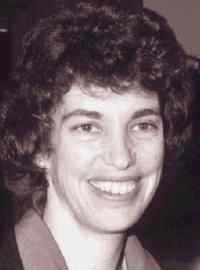
CEP ALUMNI | Alice Tepper Marlin, CEP and SAI Founder

Alice Tepper Marlin giving her response to tributes, October 27, 2015. Photo by Alicia Mara.
The dinner was held by Social Accountability International (SAI) at the Prince George Ballroom, 27th Street and Fifth Avenue, New York City. See also separate post with Tributes.

Prayer before Dinner by Loida Nicolas Lewis

Let us remember the presence of God within us. Almighty God, Lord of All Creation. We adore you, We glorify you, We give you thanks for your great glory. We especially ask your bountiful blessings on our honoree Alice Tepper Marlin whose life has been dedicated with great courage and tenacity to challenge the comfortable disorder in order to create a more just and orderly society - whether her targets are American public corporations or the military establishment or labor conditions practiced by multinationals overseas.

We thank you Lord for Alice Tepper Marlin! Bless her, Lord, and her family, her husband John and their son Jay, their daughter Caroline and her husband Francis - all the days of their lives. Bless the organization Alice founded, after the Council of Economic Priorities, Social Accountability International, in all its worthwhile endeavors.

As we are about to receive this gift from Your bounty, Lord, may this food revive our spirit and nourish our body. Bless the hands that prepared this food and those that serve it. Bless all of us here present and our loved ones near and far. Grant us wisdom and discernment to know your Will in everything that we do. We ask all of these in Your mighty name. Let us all say, "Amen"

[Remarks to come - Bruce Buchanan, C. W. Nichols Professor, Stern School of Business, NYU; and Laura Rubbo, The Walt Disney Company.]

Introduction by Amy Hall, Director of Social Consciousness, Eileen Fisher and Chair of the SAI Advisory Board

I want to read the beginning of a press release that went out this past Friday:
Yesterday, the U.S. Department of Labor gave institutional investors explicit permission to invest in businesses [like B Corps] that have adopted ESG (environmental, social, and governance) best practices like expanded fiduciary duties.
Or, in the esteemed words of Secretary of Labor Tom Perez, “ESG no longer has cooties.”

The date of that announcement: October 23, 2015. That is 47 years since Alice Tepper Marlin designed and managed the first EVER social investment portfolio management service. And 46 years since Alice founded the Council on Economic Priorities, the first EVER organization to analyze the social and environmental records of corporations.

A show of hands, please: How many people in this room were born before 1969? Those of us who have raised our hands can honestly say that, in our lifetime, a sea change has taken place in the world of business. No longer is financial performance the only way to evaluate and measure a company’s value. In our lifetime, companies no longer turn a blind eye to their social and environmental impacts. And in our lifetime, supply chains have become as visible and critical to a company’s reputation and profitability as its annual sales figures.

Alice: It is a rare feat to be able to leave a legacy such as yours. One that has turned conventional business practice on end. One that has resulted in new phrases, like “corporate social responsibility,” “social impact investing” and “human capital.” One that has compelled us to consider all the unintended consequences of our actions, and make changes that go beyond the walls of our businesses.

We are, because of you, taking responsibility for every single individual in our supply chain. Farmer, spinner, dyer, weaver, sewer, presser, washer and packer.

Thank you, Alice, for your courage to stand up against the non-believers, the multi-nationals, Wall Street and Main Street.

Thank you, Alice, for staying true to your values 50 years ago.

And most importantly, thank you, Alice, for giving voice to the most vulnerable. It is for them that we honor you tonight and hope that we can continue to fight for what is right and just. Friends and colleagues, I am deeply humbled to present to you my idol, Alice Tepper Marlin.

Response by Alice Tepper Marlin, Founder and President of Social Accountability International


Alice Tepper Marlin addresses her fans. Photo by Alicia Mara.
Thank you Amy, Loida, Joe, Bruce and Laura! You have heard people say, when they are honored: "I keep looking over my shoulder to see who you are talking about". Well, in this case, it is absolutely true!

Your accolades are a tribute to the extraordinary dedication & support of so many people gathered in this room. I’d like to recognize all of you here. I’d love to do it one by one, but I’d be talking till midnight. We’d all prefer to dance I bet, so we’ll do this collectively.

First, the brilliant, distinguished members of our Governing & Advisory Boards. Please stand! All of you. Thank you! You are a remarkable multi-stakeholder group, dedicated to our mission: Human Rights at Work. You come from heavyweight, storied brands & civil society organizations. From companies active in a wide variety of industries: The Walt Disney Company, Eileen Fisher, Tchibo, Tata Steel, Gap Inc. Gucci & HP. You represent leading civil society actors: CARE, National Child Labor Committee, Rainforest Alliance, The Business Social Compliance Initiative, the Danish Institute for Human Rights and CGIL - the largest Italian trade union confederation with 6 million members.

We are all joined by a common mission. Together we created the leading worldwide standard for decent work: SA8000. We draw on vastly different perspectives & experiences. Together we have devised ground-breaking ways to inform & empower workers. We help to protect and add to the value of the brands & retailers that participate in our work. We have made a big difference for millions of people working in factories, on farms and in service jobs. And for their families. The 2 million working in SA8000 factories & farms benefit from basic decent working conditions and respect for their human rights.

Our corporate members commit and endeavor to embed human rights & labor standards throughout their supply chains, implementing effective, collaborative, ethical management systems. Our member brands and retailers seek to contribute through due diligence in their supply chains and with their franchisees, through stable supplier relationships, and with fair purchasing practices such as minimizing last minute spec & volume changes. The impact can be substantial: lower accident rates, lower turnover, fewer rejects, higher productivity and better quality. Still, old challenges persist even as new challenges arise in a world where the pace of change accelerates faster every day.

The multi-stakeholder cooperation that SAI pioneered remains key to building a future where everyone has the right to work and live in dignity. And it continues to be a bedrock of sustainable economic systems that benefit both people and the bottom line. Working with all of you on the board has been the most exhilarating part of my job. Thank you.

Now, the staff. Would the SAI and SAAS staff and those who worked with CEP in those heady early years all please stand. Thank you! I assure you that these are the people who make it all happen day, in and day out.

You are a remarkable group - absolutely dedicated, insightful, hard working and dear to my heart. Partnering with the Rapid Results Institute, you created the TenSquared program - proven highly effective at the factory floor level. TenSquared teams up 5 managers with 5 elected workers in an innovative and fun process. Each team sets an ambitious goal to improve OHS in their factory in only 100 days. Over 90 percent of the teams make those goals! You made the Social Fingerprint program a benchmark and a tool to measure & improve supply chain management. You added decisively to the credibility and reliability of social auditing by linking workplace certification to management systems. As of this September, Social Fingerprint is also the first step in the SA8000 audit process.

You planned this very wonderful evening, you created the exhibits, you took on all the details on top of your regular programs. I thank you for your dedication, for your excellent work, for making my last two decades of work such a great pleasure.

Next, my husband John and our children - Caroline & Jay. Thank you for putting up with my often-frenetic work pace and travel schedule. John, thank you for the immensely important work you have always done as an author, editor, blogger and fund-raiser for both CEP and SAI. And for putting up with me for the 44 years of our marriage! All three of you have supported and inspired me every step of the way! Thank you.

Last, but far from the least the financial contributions of many of you here tonight have been the wind beneath our wings. We could never have done it without you! Thank you all. Friends here this evening have come around the world - from India, Belgium, Costa Rica, Switzerland, Dubai, Italy, Germany, China, and Mexico. That should make for fascinating dinner conversations. At each table, there is at least one SAI staff member and most tables have a board member as well. I hope you will ask them about their work and why they devote their hearts and minds to it.

SAI will have a new CEO as of January 1. The board, after an 8-month search of both internal & external candidates, chose our internal candidate Jane Hwang. A graduate of Columbia College and Columbia Business School, Jane has been with SAI for a decade. She currently serves as our Chief Operating Officer. I could not be happier with this choice.

Jane Hwang, the incoming CEO of Social Accountability
starting January 2016, with her husband Gus.
Jane... This evening we have heard what SAI has accomplished, and we can all savor it. But our mission is immensely ambitious, the work of more than one generation. I am so glad you have chosen to devote your life to it! The notion of CSR was viewed as a radical concept when CEP began. I savor it as a victory that CSR has become an almost universal requirement for global business and a strategic priority of business for so many companies. Still, we have taken only the first steps in the journey of a thousand miles.
  • One billion people have risen from extreme poverty during the first 15 years of this millennium. 
  • But another billion men, women & children are still destitute. Many of these people work in factories and on farms yet earn less that $1.90 a day. More than 150 million children are still working as laborers. Half of these are in hazardous work, as defined by the UN’s International Labour Organization. Most are deprived of even a basic education to offer a path out of the cycle of poverty. Numerous countries lack both the resources and the will to enforce their labor & environmental laws. 
  • What will be the employment prospects for the avalanche of refugees who risk their lives to escape the ravages of civil war in Syria and other crisis areas? How will Europe cope? What will the role of business be in this vast human tragedy? 
  • The people who produce our consumer goods and build at a dizzying pace for the fast-growing emerging economies may live on the other side of the globe, but make no mistake – they are here. [Holds up iPhone.] Visit a factory in Asia or Latin America, and you’ll see nearly every worker has a cell phone, and many of them are cameras as well. This little gadget keeps us in touch, enables much of our global work, and brings dramatic messages from distant places we may have never been to. 
  • SAI, together with Good World Solutions, is applying cell phone technology to ask workers how they perceive the impact of our TenSquared projects: Has TenSquared improved your manager’s commitment to your health & safety at work? 98 percent said yes. Did you participate in the TenSquared project? Not only the team of ten, but 89 percent of workers in these factories said yes -- some of these factories have thousands of workers. This confirms what our metrics-based assessment showed: Over 90 percent of our TenSquared teams reached their ambitious OHS goals within only 100 days. For example, evacuation was cut from 15 to 2 minutes, making it highly likely everyone would escape unhurt in case of a fire. At one factory, limb trauma accidents were reduced 70 percent. ​ 
Jane, I was fortunate to come of age when Martin Luther King marched in Selma, Birmingham, and Washington DC. We live in a much better world because of King. Still, much of what he envisioned not only for civil rights but also for fair wages and for peace – remains a dream. It is a dream that still can inspire us today…a dream that your generation can take giant steps to realize.

SAI has a meaningful part to play in realizing that dream, in practical ways, in the global context, with our business and civil society allies. A dream for a dramatic reduction in workplace fatalities, accidents and illnesses A dream for an end to poverty among working people and their children. A dream for an end to trafficking, to discrimination, and to child labor – in every corner of the world. A dream for consumers to find reliable information at the point of purchase, enabling us to reach for the brands and patronize the retailers that deliver on human rights.

The dance floor filled quickly between courses.
What marks global progress towards that dream? In the last 15 years since the UN’s Millennium Development Goals were agreed, extreme poverty has been cut in half. That’s awesome! That’s a victory. I count it as another victory that on September 25, decent work made its appearance among the UN’s 17 Sustainable Development Goals for the next 15 years. SAI is aligning our strategy and goals with these new Sustainable Development Goals. I look to the entire SAI team with our multi-stakeholder boards, and members, to do our modest but still important part to contribute to reaching these global goals, ideally in public-private partnership with government. To envision, design and successfully implement practical new & more effective ways to realize our dreams …in ways that I cannot even imagine but hope to live to see. Know that I will be here cheering you all the way. And now it’s time to dance!

Messages after the Dinner


Molly Channing: Alice and John - Last night's
celebration was one of the nicest occasions I have ever attended. First and
foremost, the outpouring of love and admiration for you, Alice, was so
beautiful. The work you have done, and continue to do, has clearly changed lives
around the world and those who have witnessed it feel compelled to share their
gratitude and appreciation. It was a very special night. Thank you so much for
including me at your table and for getting us all up on the dance floor. I can't
remember the last time I danced between courses!

I am lucky to know you both.
You are inspirational.

More messages here.

Saturday, August 29, 2015

SAI | 2015 East Hampton Visit

L to R: Nicole, Stephanie, Tracie, Tess, Alicia, Matt, Teresa, Emily, Alice, Eli. Photo by JT Marlin.

Friday, August 14, 2015

SAI | 2014 Beach Party

Richard gets ready to rescue-carry?
Maybe it's too cold in September to swim. A few toes in the water confirmed.

In 2015 the event will be in August.
Rondo had a ball. 


Rondo couldn't get enough of the sand and water and company.
Afterwards, a few went to Balsam Farm to get veggies for dinner and gourds to bring home. Here are Alice and Jane enveloped by the fall harvest.

THANKSGIVING | 1999 with Two Uncles

We had two uncles visiting at the end of November 1999. Alice's uncle Fred and my uncle Herbert.

Sunday, August 9, 2015

Friday, July 31, 2015

WELLESLEY ALUMS | July 29–Birthday Celebration

The tent makes the event rainproof and also helps keep the sound contained
to the area.
July 31–On Wednesday I joined Alice and three friends to help celebrate Fran's 70th birthday.

She came up from Philadelphia to celebrate.

We first listened to one of the free concerts that are part of the popular Bridgehampton Chamber Music Festival.

A good crowd was arrayed in chairs inside the tent and were sprawled outside on the grass.

Terry and Ron are supporters of the group, and for good reason.

Afterwards we went to the restaurant at the nearby Bridgehampton Inn, next the Loaves and Fishes cuisinerie.

In the patio in the back of the Inn we heard yet more music–a jazzed up rendition of "Over the Rainbow" and other popular melodies.

People bring their own chairs, food.
The food at the Inn has gotten better in the year since the restaurant opened.

I snapped a photo of the three Wellesley alums by the fork at the entrance to the restaurant.

We talked about the issues of the day, like:

The future of the newspaper business. How many years will it be before print newspapers just take too long to publish and deliver to impatient readers? Will is be enough for today's paper to have yesterday's news? We agreed that for the time being we like to get the news both ways. Habit.

Alice, Fran, Terry. Fork, a sign of the tines, maybe
represents the South Fork? 
Will Greece stay in the Eurozone? We seemed to agree that Greek unemployment won't come down without substantial change. If the drachma were separate from the euro, the change could come swiftly through a devaluation. Being in the eurozone prevents Greece from making adjustment quickly. Paul Krugman has taken a consistent view on the euro since it was first broached, i.e., it won't work well without greater policy harmonization.

What did things used to cost in Greece? Fran and Alice went to Greece together one summer while they were undergraduates. We reminisced about what things cost then. I remember it was two drachmas for a portocolada (bottle of orange soda) in a grocery store and 20 drachmas in a sit-down environment.

Fran convinced me that she really was interested in a book I am writing. What do you know. How nice. I promised to provide a link. Here it is.

Fran gets ready to make a wish. Alice cheers her on.
At the end of the evening there was a mini-birthday cake for Fran, who showed no disappointment at the lack of a giant cake.

I sang Happy Birthday. Maybe I owe someone a royalty for that.

The next day the celebration continued with lunch by the beach. Neighbors joined in the singing.

Then the group went on a visit to the LongHouse Reserve, a favorite among Wellesley women and indeed the #1 attraction in East Hampton according to TripAdvisor. My favorite attraction is the Yoko Ono chess set...

Wednesday, July 22, 2015

CEP | 1969–Council on Economic Priorities Founded (Updated Apr. 14, 2016)

Alice Tepper Marlin, founder of the
Council on Economic Priorities (CEP).
July 22, 2015–The Council on Economic Priorities (CEP) was founded in 1969 by Alice Tepper. She moved on to found Social Accountability International, where she is now in her last year as CEO.

In 1971 I met her when I was in my second year as a  professor in the economics and finance department at Baruch College (CUNY).

I read about her and was interested in her organization's report on pollution in the paper industry, Paper Profits.

My research assistant, Irwin Zafir, called her for an appointment. I took Alice to lunch. It was March 17. We were engaged in June and married in September. Since then she has gone by Alice Tepper Marlin, and I became John Tepper Marlin.

The paper industry study that interested me was CEP's second comparative study of business social performance and its first environment study.
L to R: Paul Newman, Alice Tepper Marlin, Harry Kahn
(CEP Board member). Photo 1988 by Marilynne Herbert. 

The first one (Efficiency in Death) was on the degree of corporate involvement in the production of anti-personnel weapons. This study had some surprises–for example, that consumer-products manufacturers like Bulova and Whirlpool were involved in making these weapons.

A Fortune article in January 2011 by James Ledbetter, based on his book about the Military-Industrial Complex, summarizes the huge impact of CEP's first study:
[I]t was a CEP book published in the fall of 1970, "Efficiency In Death," that in many ways crystallized thinking about the MIC [Military-Industrial Complex] and gave it a lasting impact. Produced with research from the American Friends Service Committee, "Efficiency In Death" focused exclusively on the manufacture of antipersonnel weapons, primarily cluster bombs, which were designed to kill human beings as opposed to destroying property and military installations.
After some introductory description, the book consists almost entirely of information about the hundred largest private companies involved in the manufacture of these weapons. A few of the larger firms, such as Honeywell (HON, Fortune 500) and Sperry-Rand, were well-known general military contractors--but many were familiar manufacturers of everyday products: among others, the Bulova Watch Company, General Motors (GM), Motorola (MOT, Fortune 500), Rubbermaid, Uniroyal and Whirlpool.
Nearly all the data was presented with the dispassion of a Wall Street analyst's company report, yet the implication was clear: invest in, work for, or patronize these companies, and you are complicit in the horrible, burning death of civilians in Vietnam.
What Tepper and her colleagues were doing with the MIC went much further than the time-honored boycott; they were suggesting that the tools of activism could be melded to the tools of investing to make participation in war unattractive from the point of view of corporate finance. This was the beginning of what would become known as "socially responsible investing."
The study of the paper industry was published the year after the creation of the Environmental Protection Agency. Its first Director (1970-1973) was William D. ("Bill") Ruckelshaus. Prior to his government service, he was vice president for legal and corporate affairs at Weyerhaeuser, which was identified in Paper Profits as one of the companies with the best environmental records, but as owning another company–Potlatch Forests–with one of the worst records. Several people from the Weyerhaeuser family told Alice they were shocked to find that they owned a company with such as poor environmental record. (Ruckelshaus later returned to Weyerhaeuser as senior vice president.)

The Price of Power
The paper industry was one of the five industries identified by McGraw-Hill as having the biggest cleanup jobs to do to meet the standards of the EPA's new regulations. The other four industries were electric utilities, steel, petroleum and chemicals.

CEP's second environmental study was on the electric utilities industry, entitled The Price of Power, co-authored by Charles (whom we all knew as Charlie) Komanoff, Holly Miller and Charles (Sandy) Noyes and published first by CEP in 1972 and then by MIT Press.

The Price of Power, CEP's second environmental study, received the same favorable reviews as the first one on the paper industry. Flora Lewis, syndicated columnist, said in Newsday:
The electric power industry has responded with a wounded roar of rage to a new study by the Council on Economic Priorities showing just what the utilities are doing about pollution.... The invectives are spouting from the utilities almost as thickly as soot.... The companies felt that showing them up was antibusiness, but it isn't. It reflects a faith that American business can act responsibly when the public is looking and, above all, a faith in the American public. That's the sort of spirit, in action, that politicians just talk about.
Time Magazine said:
Electric power plants are a major source of air pollution. Can technology reduce this pollution? Yes, according to a new study of the Manhattan-based Council on Economic Priorities.... The plant-by-plant survey leaves no doubt that there is still much room for improvement—both in present production and in planning for the future.
Four second-hand copies are available on Amazon as I write, at a price of $10.94. They are collectibles and will surely rise in value... If they are not more valuable in ten years, and you buy a copy, I will refund your money. Keep the receipt and get back to me in 2025.

Here is Charlie Komanoff's introduction of his scanning-in of The Price of Power:
Brand-new! (to the Web, that is): a scanned copy of the complete 620-page report, The Price of Power: Electric Utilities and the Environment ... published in 1972 by the Council on Economic Priorities, which conceived and sponsored it.
The report was an early broadside in the "war on coal" and documented the pervasive antipathy toward environmental protection and R&D in the U.S. electric power industry at the height of its political power in the late 1960s and early 1970s.
You may download the entire report via the link directly below. Or, since that file is huge (35MB), you may wish to download it in sections. 
Complete volume (620 pp, 35 MB).
Front Covers, Title Page, Contents, Preface, Acknowledgments (10 pp, 0.6 MB).
Intro, Fossil Fuels, Air Pollution, Nuclear Power (46 pp, 3.2 MB).
Thermal Pollution, Hydro Power, R&D, Advertising & Growth (59 pp, 4.2 MB).
Study Scope + Findings, Summary Charts, Notes (42 pp, 3.1 MB).
Company Profiles: American Electric Power, Baltimore Gas & Electric, Central Maine Power (85 pp, 4.6 MB).
Company Profiles: Commonwealth Edison, Consolidated Edison, Florida Power & Light (108 pp, 5.8 MB).
Company Profiles: Houston Lighting & Power, Iowa Power & Light, Northern States Power, Oklahoma Gas & Electric (68 pp, 3.4 MB).
Company Profiles: Pacific Gas & Electric, Portland General Electric, Southern California Edison, the Four Corners Project (88 pp, 4.4 MB).
Company Profiles: Southern Company, Virginia Electric Power (75 pp, 3.9 MB).
Appendices, Bibliography, Errata, Back Covers (38 pp, 2.4 MB).


CEP went on to do environmental reports on the other three most-polluting industries, and did follow-up studies on issues that arose from their research.

Monday, June 8, 2015

2007 - NYU Stern Names Alice Tepper Marlin Citi Distiguished Fellow

Alice Tepper Marlin, Fifth Citi Distinguished Fellow
NYU's Stern School has named Alice Tepper Marlin the fifth Citi Distinguished Fellow.

Celebrating the fifth anniversary year of the Citi Leadership and Ethics Program, the Stern School has focused on Global Corporate Social Responsibility (CSR), a rubric that spans environmental stewardship and sustainability, respect for labor and its inherent rights and the responsibilities of global capital to developing economies.

In announcing the appointment, Stern describes Alice Tepper Marlin as "one of the true pioneers in the field [who] has been called the "architect" of CSR.

She is the founder and current president of Social Accountability International (SAI), an organization that created the SA8000 workplace standard to addresses the ethics of supply chains. Slice Tepper Marlin was also the founding president and CEO of the Council on Economic Priorities (CEP), the first organization to research and publish information on corporate ethics for consumers. Its consumer handbook, "Shopping for a Better World," sold more than a million copies.

As fellow, Alice Tepper Marlin will visit Professional Responsibility classes and anchor the Citi Program's annual conference on Friday, February 22, 2008, which will include the participation of Pamela Flaherty, president and chief executive officer of the Citi Foundation. She also plans to meet with the MBA Social Enterprise Association and the undergraduate Stern Business Ethics Society student clubs, engage with members of the faculty and bring leaders from her field to the Stern community.

The four previous Citi Distinguished Fellows were Arthur Levitt, Jr., the 25th and longest-serving Chairman of the SEC; John Biggs, former Chairman and CEO of TIAA-CREF; Harvey Goldschmid, Dwight Professor of Law at Columbia University and former SEC Commissioner; and Charles Ellis, Trustee of the RW Johnson Foundation and for 30 years Managing Director of Greenwich Associates.

In anouncing the appointment, Thomas F. Cooley, Dean of NYU's Stern School, said: "The Stern School has had an abiding interest in research and teaching on the relationship between business and society and sees itself at the center of this dialogue. We are delighted that our partnership with Citi enables us to welcome Alice Tepper Marlin to the School. Her contribution to the discussion on global corporate social security is sure to stimulate discussion and debate on this important area."

Citi's commitment to CSR in the area of global climate change was recognized in September 2007 when it was named a top financial institution in the Carbon Disclosure Leadership Index. In May 2007, Citi announced that it will direct $50 billion over 10 years to address global climate change through investments and financings to support the commercialization and growth of alternative energy and clean technology.

The Citi Leadership and Ethics Program at Stern was established in 2003, through the support of the Citi Foundation. It is managed by Stern's Markets, Ethics and Law Program.

2013 - Photos from SAI Advisory Board, May

Alice Tepper Marlin, President, Social Accountability International (SAI) , NYC and Ivano Corraini, Italian General Confederation of Labour (CGIL), Rome, Italy. Photo by JT Marlin.

Laura Rubbo, Disney, Burbank, Calif. and Olga Orozco, Business Social Compliance Initiative (BSCI), Lima, Peru. Photo by JT Marlin.

John Tepper Marlin, New Jersey Institute for Social Justice, Newark, NJ and Dorianne Beyer, National Child Labor Committee, New York City. Photo by Alice Tepper Marlin.

Dorianne Beyer, Alice Tepper Marlin, Laura Rubbo. Photo by JT Marlin..

Olga Orozco; Eileen Kohl Kaufman, Executive Director, SAI; Anant G. Nadkarni, Tata Council for Community Initiatives, Mumbai, India. Photo by JT Marlin.

Darryl Knudsen, Gap Inc., San Francisco, Calif.; Joleen Ong, SAI, NYC. Photo by JT Marlin.

Luna Lee, Eileen Fisher, New York City; Harriet Lamb, Fairtrade International (FLO), Bonn, Germany. Photo by JT Marlin.

David Zwiebel, National Child Labor Committee, New York City; Alex Katz, SAI, NYC. Photo by JT Marlin.

Ivano Corraini and Federico Tani, General Confederation of Labour (CGIL), Rome, Italy; Christie Daly, SAI, NYC. Photo by JT Marlin.

Achim Lohrie, Tchibo, Bonn, Germany; Jane Hwang, SAI, NYC; Federico  Tani; Christie Daly, SAI, NYC; Ivano Corraini, CGIL. Photo by JT Marlin.

Tuesday, June 2, 2015

2015 - Small Wellesley Gathering in Boston, April

At the Union Club in Boston, celebrating the 70th birthday of Joan Hass.
 L to R: Mary Shepard, Hannah McClennan, Joan Barkhorn Hass, 
Jolinda K. Taylor, Alice Tepper Marlin. Photo by JT Marlin.
April 13, 2015 - As Hillary Rodham Clinton, Wellesley '69, was announcing her candidacy for President, I accompanied five members of the Class of 1966 at Wellesley.

The class is preparing for its 50th Reunion on June 3-5, 2016.

The first three events were in New York City (my photo), East Hampton, N.Y. and Vero Beach, Fla.

This one was in Boston, Mass., to celebrate the birthday of Joan Barkhorn Hass. The event was held at the Union Club, of which Joan Hass was the first female President, during the 2012-2013 term that included the club's 150th Anniversary year.

Dr. Edward Everett, former President of
Harvard, then the Union Club.
The Union Club was founded in late 1862 by Bostonians who were concerned about the future of the American Union. Article I of the club charter says:
The condition of membership shall be unqualified loyalty to the Constitution and Union of the United States and unwavering support of the federal government in efforts for the suppression of the Rebellion.
The club's first elected president, Dr. Edward Everett, was a man of great distinction - former president of Harvard, Governor of Massachusetts, Ambassador to the Court of St. James's, U.S. Secretary of State and U.S. Senator. The club was formal inaugurated on April 9, 1863 and Everett made a lengthy speech for the Union.
Confederate General Robert E. Lee.

Two years later, to the day, Confederate General Lee surrendered his huge Army of Northern Virginia, which had been surrounded by Union General Ulysses S. Grant, at the Court House in Appomattox, Virginia. This made inevitable total victory by the North in the Civil War, although the war did not end immediately.

John Wilkes Booth - a famed 26-year-old actor who took the side of the Confederacy - was increasingly agitated by the bad news for the South.

He met with six friends to plot how to kidnap the president and abduct him to Richmond, the capital of the Confederacy. They fixed a date on March 20, 1865 and lay in wait… but Lincoln failed to appear as he was scheduled.
Lincoln was assassinated five days after Lee's surrender.

Booth’s revised plan, to give hope to those continuing to fight on for the Confederacy, was the assassination of Lincoln,

Booth found out that Lincoln was to attend Our American Cousin at Ford’s Theatre. Lincoln was in a private box next the stage, with his wife Mary and a young couple - Army Major Henry Rathbone and Clara Harris (Rathbone’s fiancĂ©e, daughter of one of New York’s senators).

Booth entered the box and, at point blank range, fired a single shot (a one-ounce ball) at the back of Lincoln’s head with his .44 Deringer pistol. He then knifed Rathbone, as he was coming toward him, and jumped onto the stage shouting, “Sic semper tyrannis!” (“Thus ever to tyrants!”), the Virginia state motto. Booth broke his leg in the jump. He hobbled out of the theater and escaped on horseback.


The audience at first viewed the assassination as part of the play. Only when Mary screamed did they understand what had happened. A 23-year-old young Army doctor (Dr. Charles A. Leale) rushed to the presidential box and found the president slumped in his chair, in paralysis and struggling to breathe. 

Booth had been recognized and fled with David Herold across the Potomac to Virginia, where he was hunted down to a farmhouse. The soldiers torched it. Herold surrendered. Booth stayed inside until the heat became too intense. When he became visible, a sergeant shot him and Booth lived only three more hours.

Meanwhile, several soldiers carried Lincoln across the street to a red-brick boarding house. Dr. Robert King Stone, the Lincoln family physician, arrived soon in his carriage and pronounced that nothing could be done for Lincoln.

Lincoln had already been suffering from the health effects of being a wartime president. He had fainted two months earlier in an argument with his Attorney General over pardons for desertion.

The president’s body was taken to the White House and was carried to the Capitol rotunda to lay in state. On April 21, the President's body was put on a train to his hometown of Springfield, Ill. Tens of thousands lined the railroad route. Lincoln was buried at Oak Ridge Cemetery, near Springfield, next his son Willie, who predeceased him.

Four co-conspirators including David Herold were convicted of conspiracy to murder and were hanged for this on July 7, 1865. The four included Mary Surratt, who ran the boarding house where the seven conspirators first met.